
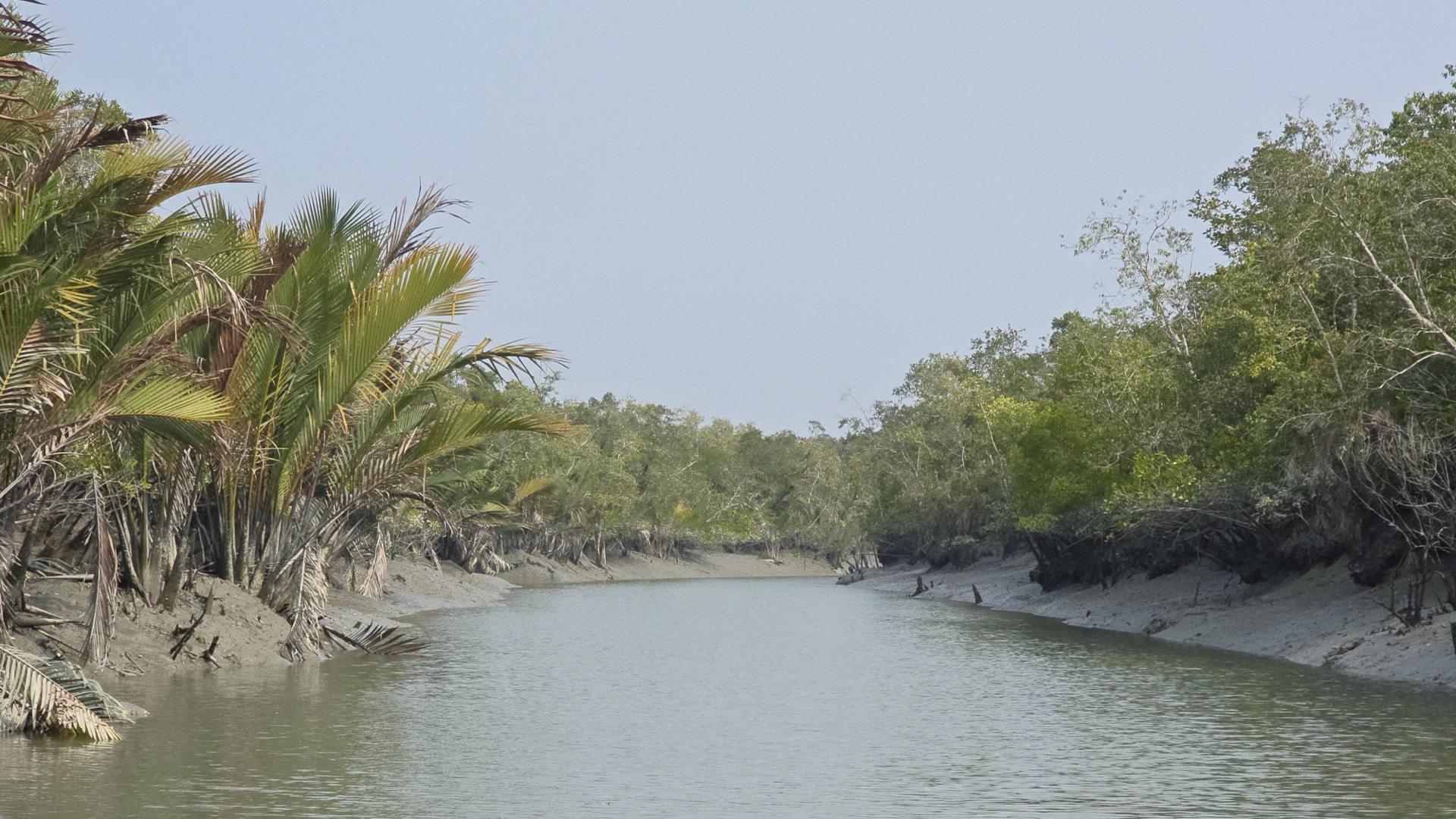
What's at stake?
The world’s largest contiguous mangrove forest and a UNESCO World Heritage Site, the Sundarbans spread across the Ganges-Brahmaputra-Meghna delta on the Bay of Bengal. Dense mangroves, mudflats and tidal waterways form a nursery and feeding ground for fish, crustaceans and threatened wildlife, while shielding coastal communities from cyclones, storm surges and erosion. Despite this importance, its aquatic biodiversity has seen little long-term monitoring.
Communities involved
Students, researchers, and citizen scientists take part in sampling, with tourist boat crews, skippers and fishers as key partners.
Science plan summary
Main scientific question: How do aquatic biodiversity patterns vary across seasons and years, and can eDNA support long-term conservation and fisheries management in this climate-vulnerable ecosystem?
Localities sampled (2–4, only 1 confirmed): An upstream site near the Middle Heritage-Sanctuary area; the others are still to be chosen with UNESCO and the park authorities
Why there: Accessible and safe for repeat sampling, less than 15 m deep, covering estuarine and mangrove habitats along the salinity gradient
Sampling dates: September, December, March (nothing May–August)
Why then: September is post-monsoon, with the most freshwater influence. December starts the dry season as salinity shifts. March is the late dry season, with the highest salinity, when communities may differ most. May–August is skipped because of the monsoon and cyclone risk.
About our site
The Sundarbans World Heritage Site is the world’s largest contiguous mangrove forest, located in the delta formed by the Ganges, Brahmaputra, and Meghna rivers along the northern coast of the Bay of Bengal. Spanning parts of Bangladesh and India, this unique tidal ecosystem consists of dense mangrove forests, mudflats, tidal waterways, and estuaries that support exceptionally rich biodiversity.
The Sundarbans is internationally recognized for its ecological importance as a nursery and feeding ground for numerous fish, crustaceans, and aquatic species, while also providing habitat for threatened wildlife such as the Royal Bengal Tiger, estuarine crocodile, dolphins, and migratory birds. Beyond its ecological value, the forest protects coastal communities from cyclones, storm surges, and erosion, while supporting the livelihoods and cultural heritage of millions of people dependent on fisheries and forest resources.
Conservation and management activities include protected area management, wildlife sanctuaries, biodiversity monitoring, habitat restoration, anti-poaching initiatives, and community-based conservation programs. However, compared with terrestrial wildlife, relatively limited effort has been devoted to long-term and regular monitoring of aquatic biodiversity in the Sundarbans, despite its immense ecological and economic importance.
“Generated data will help us to understand how climate change, salinity intrusion, and human pressures are reshaping aquatic biodiversity in the Sundarbans.”
What we plan to achieve
Through eDNA Expeditions, our site aims to establish a long-term, non-invasive biodiversity monitoring framework for the Sundarbans World Heritage Site, with a particular focus on its aquatic ecosystems. By conducting repeated eDNA sampling during different seasons, we aim to generate baseline and temporal data that can support ecosystem-based management and conservation planning.
A key management question we hope to address is how seasonal environmental variation and changing salinity regimes affect the distribution and diversity of fish, crustaceans, mollusks, and other estuarine and mangrove-associated organisms, including threatened and commercially important species. We are also interested in detecting rare or cryptic species and understanding shifts in species assemblages over time within this dynamic mangrove ecosystem, as well as how climate change, salinity intrusion, habitat degradation, and anthropogenic pressures are shaping aquatic biodiversity.
This work directly supports local and national conservation objectives by strengthening biodiversity assessment capacity, improving scientific data availability for protected area management and Red List assessments, and promoting evidence-based decision-making for sustainable fisheries and ecosystem conservation.
In addition, the project will engage students, researchers, local communities, and citizen scientists, helping build regional capacity in eDNA applications and increasing public awareness of the importance of conserving the Sundarbans. The initiative will also contribute to the doctoral research of a PhD student investigating long-term biodiversity dynamics and the application of eDNA as a transformative tool for monitoring mangrove ecosystems under climate change.