
What's at stake?
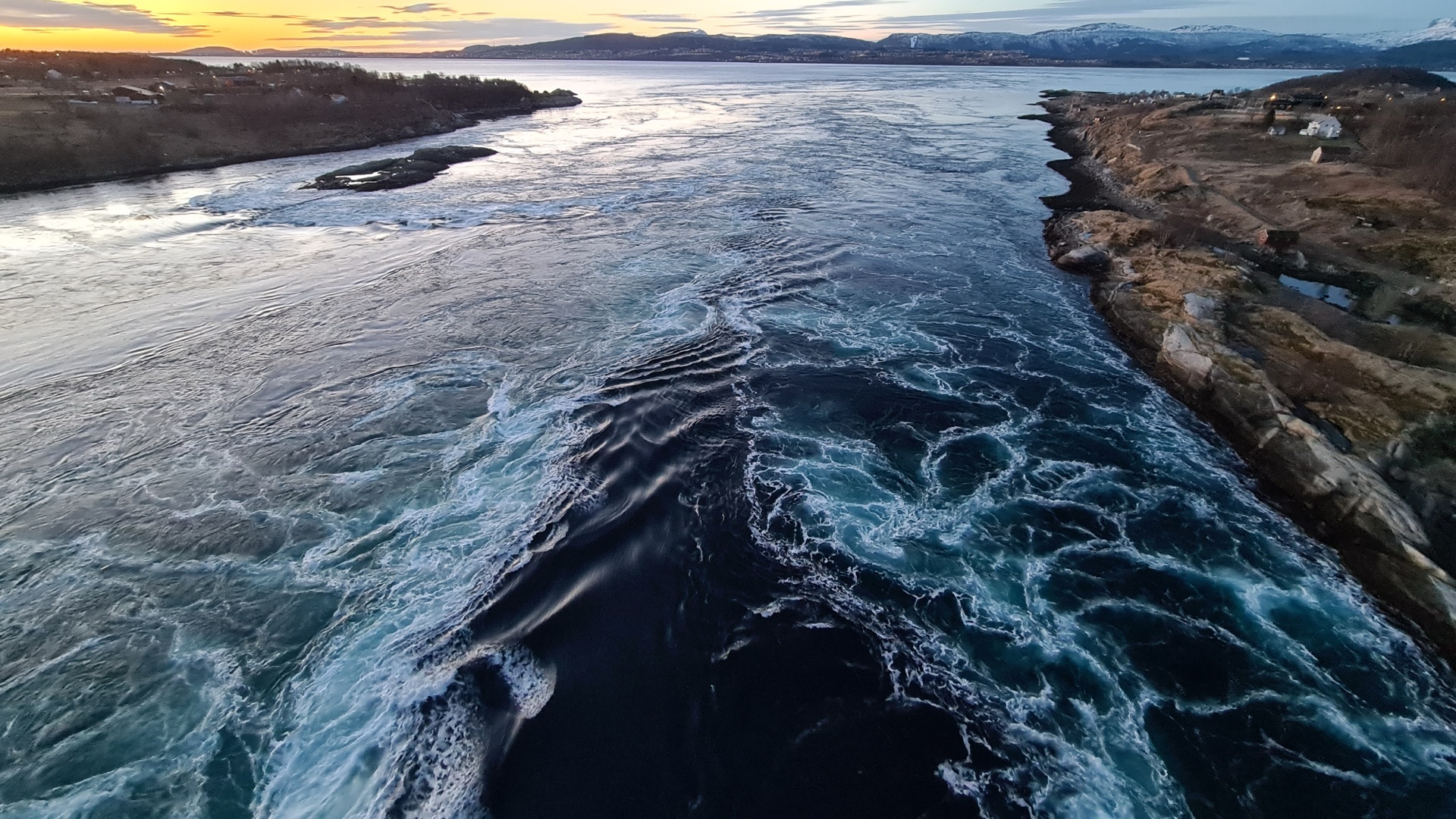
Home to one of the world’s strongest tidal currents, Saltstraumen forces immense volumes of seawater through a narrow strait every six hours, driving whirlpools and deep mixing that build hard-bottom habitats for anemones, sponges and soft corals. The 2013 marine protected area safeguards only the seabed, leaving fishing, aquaculture, mining and hydropower to add pressure. Sitting near the Arctic transition, the site is acutely sensitive to polar warming.
Communities involved
Residents of Bodø municipality and local schoolchildren, with a connection to documenting species of traditional importance to the Sami, the Indigenous people of northern Europe.
Science plan summary
Main scientific question: What eDNA signals flow through the tidal current at different tidal phases and seasons (local vs regional diversity), and what does this say about harvested, invasive and threatened species?
Localities sampled (2): Nord&Ne jetty and Oksbåsen, on opposite sides of the channel
Why there: Both lie inside the tidal channel; Oksbåsen is an upwelling area, so it should give more benthic signal
Sampling dates: Year-round, at incoming and turning tide about 3 hours apart, 6 replicates per location
Why then: At 67°N, light ranges from a month of polar night to midnight sun, so they suspect strong seasonality in biodiversity. Tidal timing is there to separate local from regional diversity, not seasonal change.
About our site
Saltstraumen in northern Norway is one of the world’s strongest tidal currents. Every six hours, immense volumes of seawater surge through a narrow strait connecting two fjords. This powerful flow creates massive whirlpools and drives intense deep-water mixing, which prevents sediment buildup and facilitates the formation of hard-bottom habitats that host unique communities of sea anemones, sponges and soft corals.
Saltstraumen’s dramatic currents and biodiversity make it an iconic natural feature in northern Norway. In 2013, the Saltstraumen marine protected area was established to conserve this valuable ecosystem. However, protection only extends to the seabed, and fishing and boating activities are not restricted. Nearby activities such as aquaculture, mining, and hydropower in the adjacent fjords pose additional threats. Saltstraumen also lies near the transition between cold-temperate and Arctic marine regions, making it sensitive to climate change, as the nearby polar seas are warming rapidly.
“By comparing biodiversity inside and outside the marine protected area, we aim to understand the benefits of its protection and to advocate for tighter restrictions.”
What we plan to achieve
Saltstraumen and the adjacent fjords have been included in some long-term monitoring programs of zooplankton and fish species. Such time series connect past and present observations to changes in biodiversity and are highly valuable for the long-term monitoring of protected areas. As part of eDNA Expeditions 2026–2028, we will use the high resolution of eDNA to complement these time series and address a range of questions regarding marine life in Saltstraumen and the adjacent fjords. By comparing biodiversity within and outside the Saltstraumen marine protected area, we aim to better understand the benefits of its protection for the ecosystem and to provide improved management recommendations.
In particular, we will assess the presence of species targeted by fisheries, angling, spearfishing and other forms of harvesting not permitted within the marine protected area, and track changes in their relative abundance. We will examine the temporal distribution of marine mammals and seabirds, including seals, cetaceans and a population of eider ducks that once numbered in the thousands. We will also investigate the presence of invasive alien species such as pink salmon, which is currently common, and red king crab, which remains rare.
The project will document species of traditional importance to the Sami — the Indigenous people of northern Scandinavia — including cod, saithe, halibut, herring and Atlantic salmon, alongside species of conservation concern whose status is often uncertain, such as Atlantic wolffish, maerl (calcareous red algae), and the cold-water coral Lophelia (Desmophyllum pertusum). We will also examine the increasing occurrence of southern species associated with climate warming, such as the common or brown crab (Cancer pagurus) and the European lobster (Homarus gammarus), as well as microfungi and algae with opportunistic bloom patterns that may emerge in response to anthropogenic eutrophication or temperature changes within the fjord system.
More broadly, we are interested in all life in the area and look forward to the surprises that the strong tidal current may reveal — from fish, lobsters, scallops and other molluscs to orcas, sperm whales, fin whales, harbour porpoises and basking sharks, as well as anemones, sponges, starfish, seaweeds, corals, jellyfish and many other forms of life. With these goals in mind, we aim to use the scientific data collected to advocate for tighter restrictions within the Saltstraumen marine protected area.