
What's at stake?
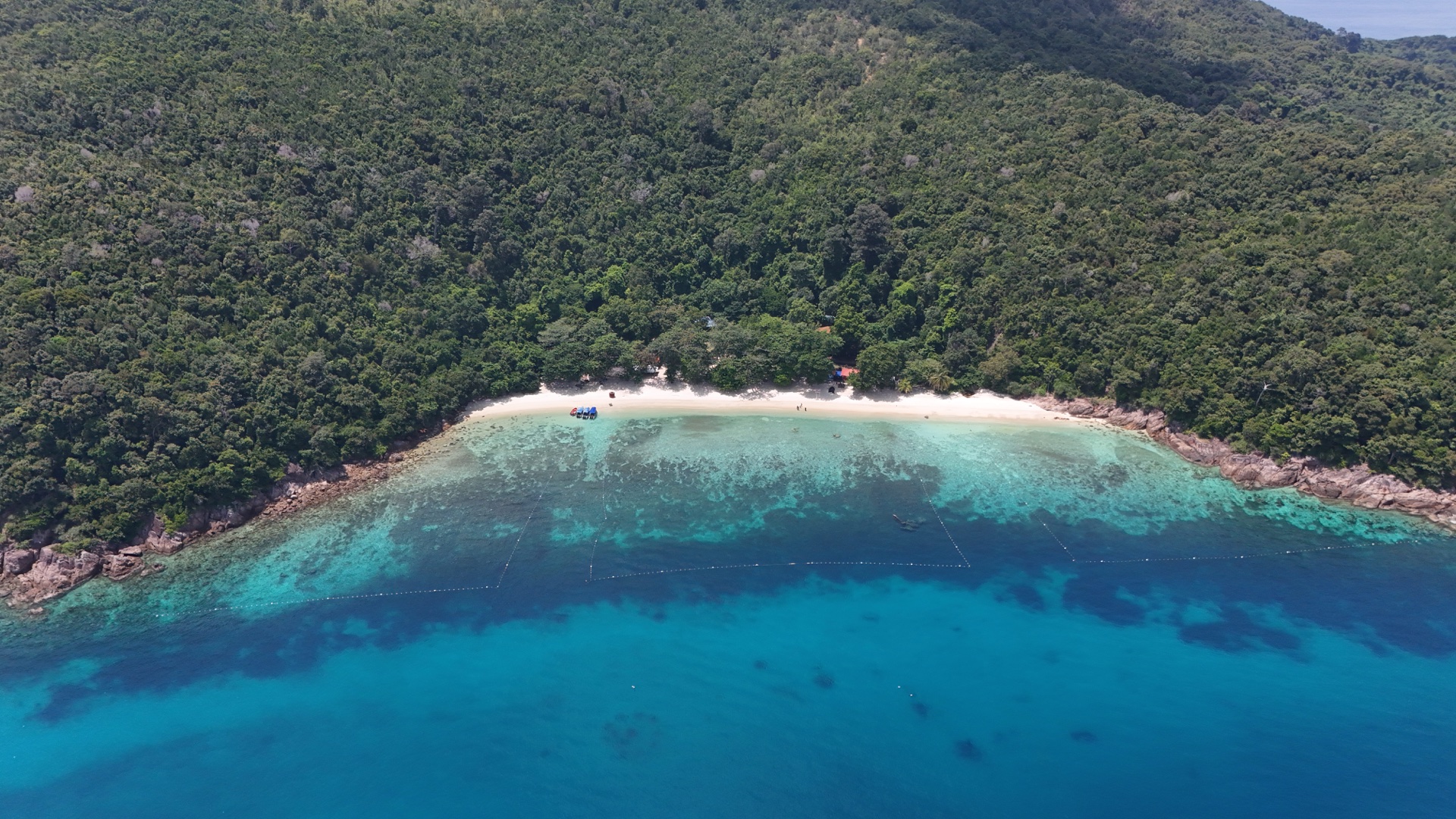
In a small area, Bidong Island concentrates a rare diversity of reef types, from branching corals to submerged, boulder and wall reefs, while the fully protected Yu Island offers an undisturbed natural baseline. In January 2019, Tropical Storm Pabuk destroyed up to 70 per cent of Bidong’s reefs overnight. Recovery is under way, but without an eDNA baseline neither this diversity nor its recovery can be tracked.
Communities involved
Dive centres and local fishing communities will collect samples, with schoolchildren and neighbouring villages as later-stage partners.
Science plan summary
Main scientific question: How do reef cryptofauna and fish communities recover after monsoon disturbance, and how do the protected (Pulau Yu) and unprotected (Pulau Bidong) reefs differ, using ARMS and eDNA together?
Localities sampled (2 islands): Pulau Bidong and Pulau Yu, each with sheltered and exposed zones
Why there: Bidong is the unprotected, storm-battered site; Yu is the protected, pristine baseline
Sampling dates: April, July, October (seven events over three years)
Why then: Sampling spans before, during and after the Northeast Monsoon (Oct–Mar). Bidong is expected to show storm-driven species loss and fast turnover by rapid colonisers, with sheltered zones as refuges. Yu is expected to stay stable.
About our site
Pulau Bidong and Pulau Yu, located off the east coast of Terengganu in Malaysia, represent two contrasting yet ecologically linked tropical reef systems shaped by both natural disturbance and human history. Pulau Bidong, a non-marine protected area (non-MPA), is historically known as “Little Saigon” for its role as a major Vietnamese refugee settlement during the late 1970s following the Vietnam War. Today, the island is sparsely inhabited, hosting a research station and basic tourism infrastructure within a recently gazetted state park. Its surrounding reefs, periodically impacted by strong monsoonal and storm-driven conditions, range from branching coral assemblages to boulder-dominated and submerged reef structures, creating a heterogeneous and dynamic benthic landscape.
In contrast, Pulau Yu is a designated marine protected area (MPA) characterised by sloping reef systems that develop along its rocky island profile. Largely undisturbed and free from permanent human settlement, the island supports relatively intact reef habitats with minimal direct anthropogenic pressure. Together, these sites provide a valuable natural setting to examine how protection status and environmental disturbance influence tropical reef biodiversity, particularly within cryptic and understudied communities.
“In 2019, Tropical Storm Pabuk destroyed almost 70% of the Bidong coral reef area. eDNA Expeditions will allow us to learn more about the ongoing recovery process and have a complete overview of the marine biodiversity in the area.”
What we plan to achieve
The eDNA Expeditions at Pulau Bidong and Pulau Yu are motivated by the need to complement an ongoing biodiversity assessment using Autonomous Reef Monitoring Structures (ARMS), recently deployed to capture the temporal colonisation of cryptic invertebrate communities over a two-year cycle. By integrating environmental DNA with subsequent metabarcoding analyses from ARMS retrievals, this work seeks to link water-column biodiversity signals with physically sampled benthic assemblages, providing a more complete and validated understanding of reef biodiversity.
A key aim is to determine how differences in reef topography — ranging from branching coral habitats and boulder fields to sloping rocky reefs — influence the presence, absence, and turnover of both visible and cryptic fauna across protected (MPA) and non-protected (non-MPA) systems. The comparison between Pulau Bidong and Pulau Yu offers a natural framework to evaluate how environmental disturbance and management status shape biodiversity patterns.
This effort also supports local management priorities by establishing biodiversity baselines, detecting fisheries-relevant species, and strengthening ecosystem monitoring approaches. Ultimately, the integration of eDNA and ARMS-based metabarcoding will contribute to more informed conservation planning and improved management of tropical reef ecosystems.