
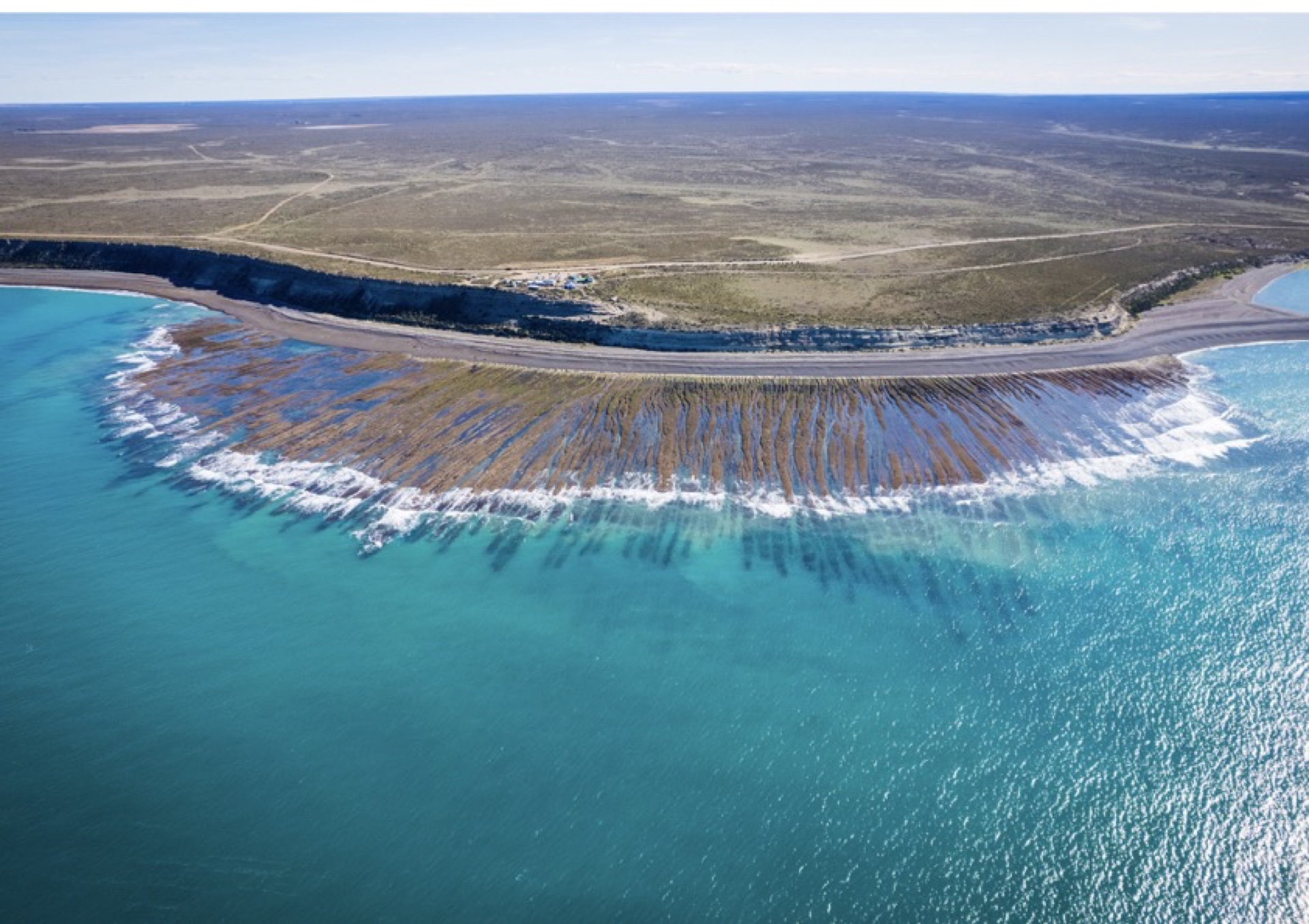
What's at stake?
A UNESCO World Heritage Site, Biosphere Reserve and Ramsar Site on the Patagonian coast, Península Valdés is a coastal, marine and terrestrial protected area of exceptional value, recognized internationally for its shorebirds and bird life. Across its full ecosystem, from large marine mammals and fish to invertebrates and microorganisms, marine biodiversity still lacks a long-term time series.
Communities involved
Local coastal stakeholders engaged, coordinated by a dedicated community engagement lead in the site team, taking part through education and non-invasive, low-impact techniques, with CESIMAR-CONICET scientists.
Science plan summary
Main scientific question: How does eDNA-detected biodiversity vary across habitats, seasons and years, and can it detect rare, cryptic, migratory or threatened species and early signals of climate or human-driven change?
Localities sampled (4): Doradillo, Riacho, Caleta Valdés, San Lorenzo
Why there: Stratified to cover the main habitat types, environmental gradients, conservation priorities and levels of human influence
Sampling dates: July, October, January, April, 2026–2028
Why then: One campaign per season. Southern right whales arrive in early austral autumn and leave in late spring, and migratory seabirds pass through, so species composition should shift through the year.
About our site
In recognition of its exceptional values, Península Valdés has received major international, regional and national designations, including “Natural World Heritage” and “Biosphere Reserve” by UNESCO, “RAMSAR Site” under the Convention on Wetlands, a Site of Regional Importance within the Western Hemisphere Shorebird Reserve Network (WHSRN), and an Important Bird Area by BirdLife International.
“Getting the genetic fingerprint of the ocean will help us to protect the natural wealth of Península Valdés.”
What we plan to achieve
Through eDNA Expeditions, we seek to transform our understanding of biodiversity at Península Valdés. Our goal is to establish long-term monitoring that will allow us to track how marine life changes over time, using cutting-edge genetic technology to detect the “fingerprints” that organisms leave in the water.
Unlike traditional methods, this project allows us to observe the complete ecosystem — from large marine mammals and fish, to invertebrates and microorganisms that are essential to ocean health. By addressing key questions about the presence and seasonality of these species, we will provide accurate information to help local managers make better conservation decisions.
This effort is, above all, a shared commitment. We want the community to be an active part of science through education, promoting non-invasive techniques that respect the environment. By integrating Península Valdés into this global UNESCO network, we ensure that the protection of our coastlines is grounded in the best available scientific evidence.