
What's at stake?
On a wild stretch of the Mexican Pacific off Oaxaca, an unusually narrow continental shelf brings pelagic life close to shore, from calving humpback whales to orcas, blue whales and large pods of spinner dolphins. Sheltered bays hold coral reefs that grow in rough, current-swept water, making them resilient but hard to study. Under intensifying marine heatwaves, accelerating coastal development and rising shipping traffic, the coast still has no biodiversity baseline, and its marine microorganisms remain almost unknown.
Communities involved
Indigenous communities of the Oaxaca coast join as knowledge holders. Older artisanal fishers add irreplaceable historical records of shifting distributions to biomolecular insights.
Science plan summary
Main scientific question: Are coral reef communities recovering after the heatwave-driven mass mortality, and which habitats, taxa and bays are more resilient or vulnerable?
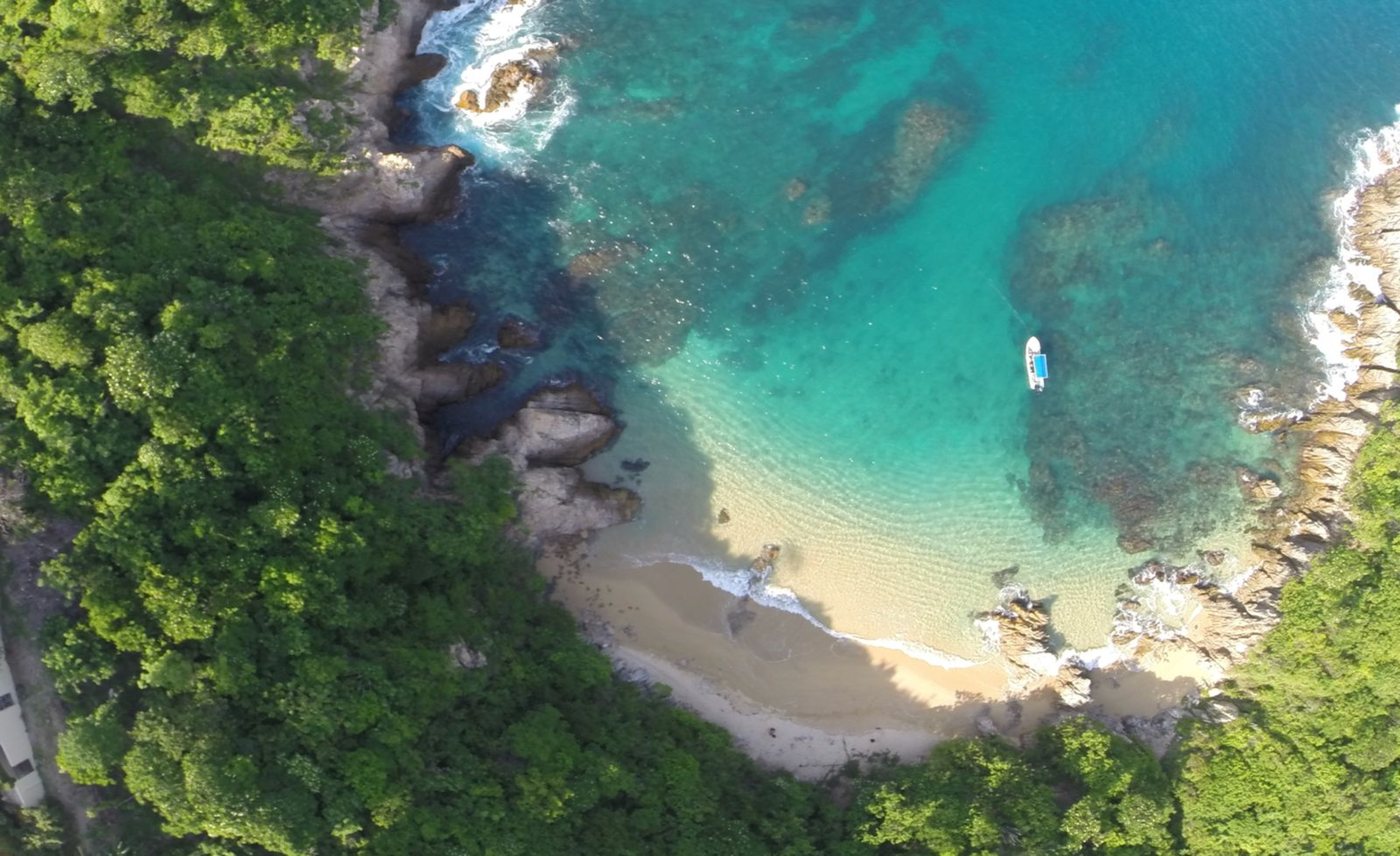
Localities sampled (3): Chachacual, Maguey and Cacaluta bays
Why there: Reef bays with long-term monitoring that were hit by the marine heatwave, to compare recovery
Sampling dates: Twice in the rainy season (May–Oct) and twice in the dry season (Nov–Apr), preferably at the start and end of each; start depends on kit arrival
Why then: The two seasons differ in freshwater input, salinity, turbidity, nutrients and productivity. They also want to document El Niño and La Niña effects, such as warming, bleaching and changes in upwelling.
About our site
Huatulco National Park is located along the southern Pacific coast of Mexico, in the state of Oaxaca, and protects an exceptional mosaic of marine and coastal ecosystems. Its nine bays encompass coral reefs, mangroves, sandy beaches, and tropical dry forests, creating diverse habitats that support high biodiversity, from invertebrates and reef fishes to sea turtles and marine mammals. The region is particularly significant due to the proximity of deep waters to the coast, which promotes the presence of oceanic species and unique ecological processes. Beyond its biological richness, Huatulco holds strong cultural and social value, as local communities depend on these ecosystems for livelihoods such as fisheries, tourism, and recreation.
The park is a protected natural area with ongoing management, monitoring, and restoration programs led by governmental and academic institutions, as well as local organizations. These efforts aim to preserve the ecological integrity of the site in the face of pressures such as coastal development, fishing, and the impacts of climate change, including recent marine heatwaves that have affected coral reefs.
“We are losing species we do not even know existed.”
What we plan to achieve
Through eDNA Expeditions, Huatulco National Park aims to document seasonal changes in marine biodiversity and assess how these communities respond to extreme environmental events, particularly marine heatwaves. By sampling across coastal habitats such as coral reefs, sandy bays, and nearshore waters, we seek to identify shifts in biodiversity throughout the year and detect early signs of ecological change that may not be visible through traditional monitoring alone.
This work will help answer key management questions, including which species and groups are present across different habitats, how biodiversity changes between seasons, and whether marine heatwaves are altering the composition of reef-associated, pelagic, and microbial communities. The project will also support local conservation objectives by generating baseline biodiversity data for a protected area facing increasing pressure from coastal development, tourism, fishing, and climate change. By integrating eDNA with ongoing monitoring and local participation, this project will strengthen biodiversity assessment in Huatulco and provide useful information for conservation planning, ecosystem health evaluation, and long-term management of the park.