
What's at stake?
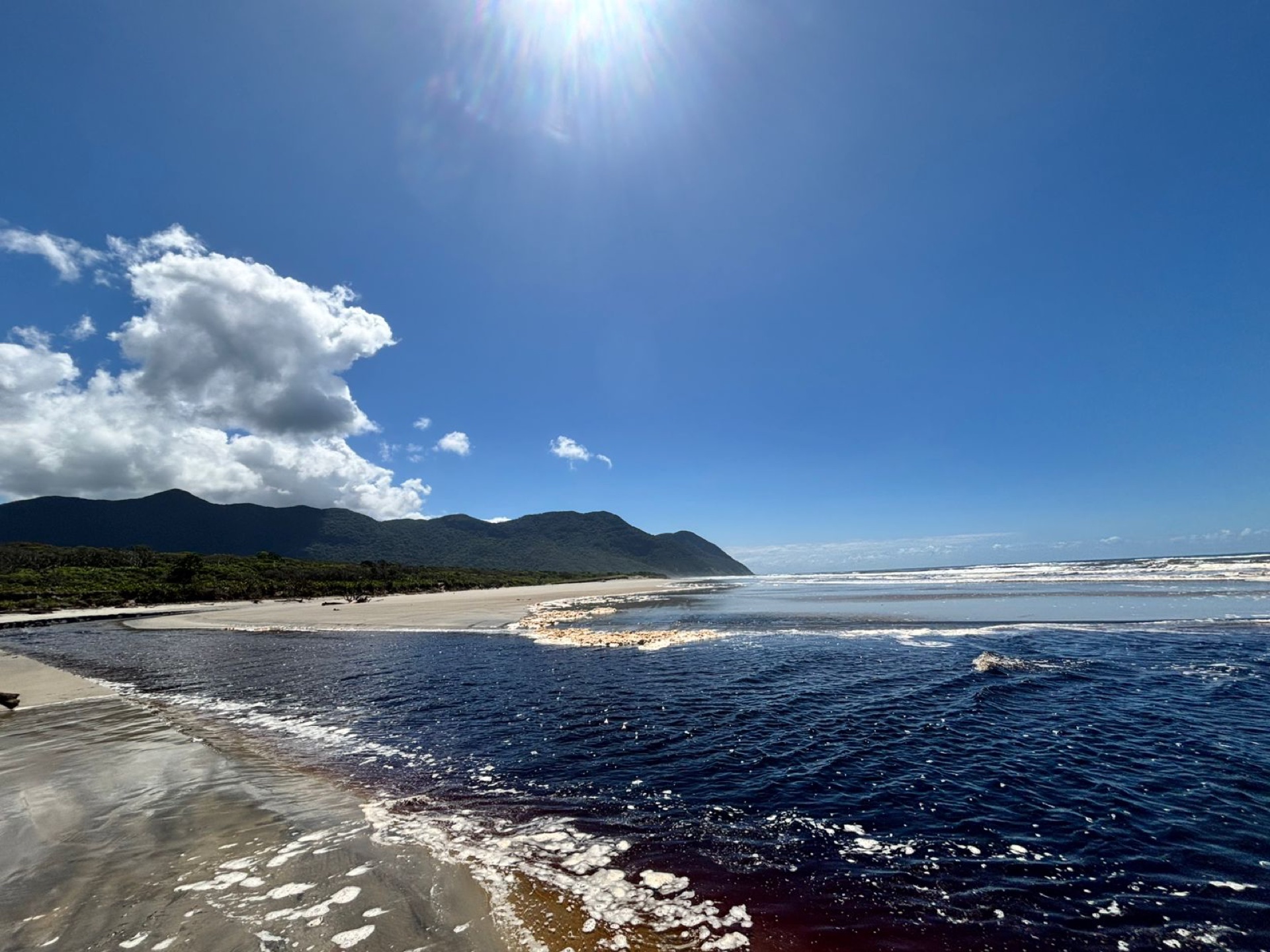
The largest and best-preserved coastal system in Brazil, this UNESCO biosphere reserve within the Atlantic Forest stretches more than 100 kilometres and holds the largest mangrove in São Paulo State. A living mosaic of beaches, rivers, islands and mangroves where fresh water meets the sea, it sustains estuarine dolphins, red-tailed parrots and sea turtles amid tides and salinity that shift by the hour. Despite decades of conservation, no molecular biodiversity survey has ever been carried out here.
Communities involved
Three traditional fishing and mussel-harvesting communities, including Prelado and Baía Una, shape the sampling through their knowledge of species, seasons and tides, with before-and-after surveys tracking how their view of local biodiversity changes. A local third-grade class joins through its teacher, supported by a local team spanning molecular ecology, water quality, genetics and State Park management.
Science plan summary
Main scientific question: What is the baseline biodiversity across estuarine, mangrove and coastal habitats, how does it vary in space, time and with environmental gradients, and how does eDNA compare with conventional surveys?
Localities sampled (4): Prelado rocky shore (P1), Juréia Beach (P2), Ilha Comprida (P3), Mar Pequeno estuary (P4)
Why there: Spans a low-disturbance reference, an estuarine transition, a marine site with more tourism, and an urban estuary used for Blue Schools outreach
Sampling dates: Every 3–4 months: Jul–Aug, late Nov–early Dec, Feb, Apr–May
Why then: One campaign per season. Temperature, salinity, turbidity, freshwater input and pH are expected to drive community change. A forecast El Niño in late 2026 may alter crustacean communities, as seen in earlier events.
About our site
The Cananéia–Iguape–Peruíbe Environmental Protection Area, located on the southern coast of São Paulo State, Brazil, is one of the most important coastal ecosystems in the country. This protected area encompasses a vast and highly connected estuarine–lagoon–coastal system, including extensive mangroves, estuaries, coastal waters, and strong influence from the Atlantic Forest, one of the most biodiverse and threatened biomes in the world.
The region is part of one of the largest and best-preserved Atlantic Forest remnants in Brazil and provides essential ecosystem services such as fisheries support, nursery habitats, carbon storage, and coastal protection. It also holds high cultural importance, as traditional communities and artisanal fishers depend directly on these ecosystems for their livelihoods and maintain deep ecological knowledge of the area.
Despite its ecological and social relevance, marine biodiversity in this region remains incompletely characterized, particularly from a molecular perspective. The area is currently under environmental management and conservation programs, but there is still a need for high-resolution biodiversity data to support long-term monitoring and informed decision-making.
“Protecting this place means protecting both nature and people together.”
What we plan to achieve
Through eDNA Expeditions, we aim to establish the first comprehensive molecular biodiversity baseline for the Cananéia–Iguape–Peruíbe Environmental Protection Area, enabling a deeper understanding of species composition across mangrove, estuarine, and coastal habitats. By applying eDNA metabarcoding, we will monitor a wide range of taxonomic groups and generate high-resolution data that can complement existing ecological surveys.
A central objective is to detect rare, cryptic, and invasive species that are often overlooked by traditional monitoring approaches, providing early warning signals of ecological change. We also aim to assess how biodiversity varies spatially and temporally across this large and environmentally heterogeneous system, and how these patterns are influenced by key environmental variables such as temperature, salinity, dissolved oxygen, and turbidity.
This work will directly support conservation and management by generating actionable, science-based information that can inform adaptive strategies within the protected area. By integrating eDNA data with ongoing monitoring programs, we will strengthen the capacity for long-term biodiversity assessment and improve the detection of emerging ecological threats.
In addition to its scientific goals, the project is designed to promote strong local engagement. We will involve schools, students, and artisanal fishers in sampling campaigns, workshops, and outreach activities, fostering environmental awareness and connecting scientific research with local knowledge. By combining cutting-edge molecular tools with community participation, we aim to contribute to more inclusive and effective conservation practices in this important South Atlantic coastal ecosystem.